
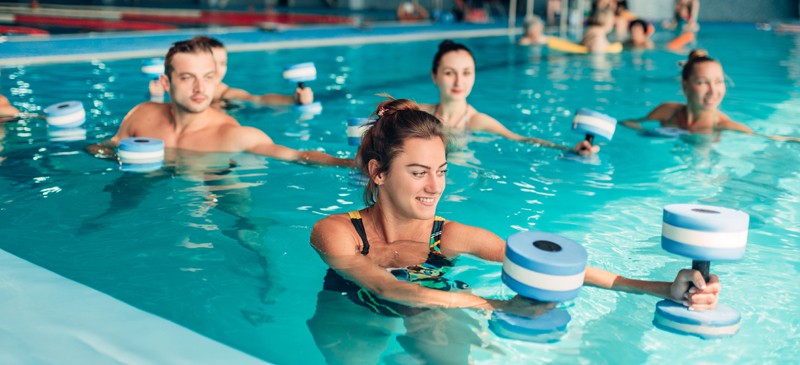
In a therapeutic sense, water has been used for a long time. In truth, this technique dates back centuries and is now considered fundamental to the art and science of traditional medicine. Hydrotherapy has been shown to provide a lot of potential health benefits when used in sports medicine, but many of us still need a more comprehensive understanding of this practice.
Hydrotherapy is a name you may be familiar with, but you probably need to learn what it comprises. The patient in hydrotherapy receives care and exercises in a pool designed specifically for that purpose. A therapist with expertise in hydrotherapy will guide you through these sessions. This kind of physiotherapy service is sometimes referred to as “hydrotherapy.” The ramifications of this raise questions such as that…
What is a Pool for Hydrotherapy?
A pool may be designated for hydrotherapy if it meets certain requirements. To sum up, a pool can only be called a hydrotherapy pool if the water within is kept at a certain temperature. The average water temperature is about 33 degrees Celsius, with occasional peaks of 36 degrees. The typical temperature of a public swimming pool is between 26 and 28 degrees Celsius; thus, this is much higher.
What Is the Purpose of Hydrotherapy?
There is more to hydrotherapy than only what it can do for patients in terms of therapeutic benefits. The following are some of the conditions that may benefit from hydrotherapy treatment:
- Post-Op Joint Replacements: Total hip replacements (THR) and total knee replacements (TKR)
- Arthritis: both Osteoarthritis and Rheumatoid Arthritis
- Fibromyalgia
- Elderly
- Chronic Pain
- Stroke
- Athletes
- Muscle Strains
- Lower Back Pain
How Does Hydrotherapy Work?
In hydrotherapy, water use may bring about various effects, including support, help, and resistance. Because of the buoyancy of the water, hydrotherapy pools are able to accommodate a broad range of activities, including the following:
Support
Takes place while exercising on the surface of the water; equipment such as noodles, paddles, boards, and armbands may be helpful.
Assistance
By adjusting the speed at which you move and providing you with buoyancy aids, the therapist will be able to assist you in regaining mobility, alleviating pain, and improving your coordination and balance.
Resistance
When training the limb as it goes away from the surface of the water, the therapist may increase the amount of resistance it encounters by altering the turbulence and buoyancy of the water. Hydrotherapy has the advantage of producing a beneficially uniform load that is spread out throughout the whole of the limb. This is one of the benefits of hydrotherapy.
What Advantages Does Hydrotherapy Have?
Hydrotherapy has several benefits in addition to offering comfort, aid, support, etc. We listed below the advantage of hydrotherapy.
Warm Water
The temperature of the water is kept between 33 and 36 degrees Celsius and is kept constant, creating an environment that is pleasant and therapeutic for training, as well as an atmosphere that prompts muscular relaxation, facilitates stretching, and reduces discomfort. The temperature of the water is kept between 33 and 36 degrees Celsius. In addition, the water’s temperature is controlled so that it remains the same throughout.
Lessen Weight-bearing
Gravity is greatly lowered for supported exercise that may not normally be authorised (for example, at early stages post-operatively) or not be practicable (for example, in patients battling with considerable pain or weakness) and allows for gradual weight-bearing. There is only an 8% chance of weight bearing when the water is up to your neck; there is only a 30% chance when the water is at chest level; and there is only a 50% chance when the water is at hip level.
While Being Challenged, Provides Aid, Support, or Resistance.
Your therapist will be able to optimise your programme in such a way that it is suitable and successful at any point of your rehabilitation, with the aim of regaining flexibility, balance, posture, strength, and cardiovascular fitness.
What Are the Adverse Effects of Hydrotherapy?
You may be wondering whether there are any risks associated with hydrotherapy. As is typical with interventions, not everyone will respond the same way. Exhaustion is a possible side effect of swimming in warm water. Hydrotherapy has the potential to make you thirsty and hungry as a result of the water’s heat, causing your body to lose fluids. Thus, some people may begin experiencing mild brain trauma as a result. To avoid this, eat a banana and drink water before and after exercise. For your comfort, we may also provide drinks like water to sip on if you are thirsty throughout the meeting.
Some others reported feeling chilly after exiting the hot water. The changing rooms and the area surrounding the pool are heated to reduce this. Again, this is typical, particularly if you last worked out a while ago. Some individuals report feeling achy after a workout. You will feel less sore after the first few hydrotherapy sessions since your body will have adapted to the new demands.
To Sum It Up
After reading all the material presented here, you should clearly know whether hydrotherapy is an appropriate treatment choice for you. Under the direction of one of our highly trained physiotherapy specialists, hydrotherapy is an excellent, risk-free, and enjoyable method to get in some exercise. After a lengthy absence from physical activity, this is an excellent and safe method to get back into the routine of working out.
 Tips & advice for living healthiest life