
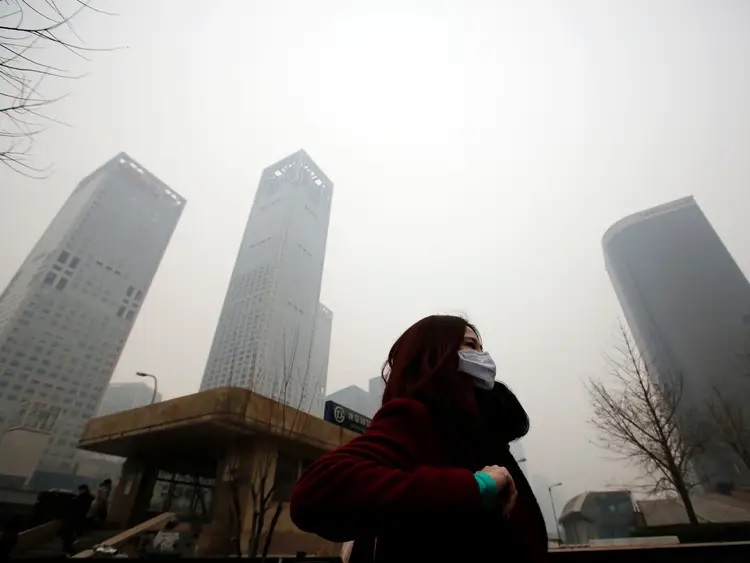
In 2019, deaths linked to water, chemical, and air pollution totalled nine million across the world. This is equivalent to one in six deaths. The Lancet Commission on Pollution and Health confirmed that this has been the case since 2015, the year the Dieselgate diesel emissions scandal first broke out.
Additionally, the Lancet Planetary Health published a report that showed that most of the pollution-related deaths happened in low- and middle-income countries, as well as countries that have not had any reliable programs or campaigns against pollution.
With the number of premature deaths continually rising, pollution has become the biggest environmental risk factor in the world. Its death toll is even higher than HIV and AIDS, TB and malaria, drugs and alcohol abuse or misuse, and road traffic.
Pollution has also caused the global economy trillions of dollars if one calculates the financial impact of premature deaths.
After the first global review six years ago, positive changes were expected but nothing significant has happened so far. The global impact of pollution is still the same. Despite this fact, there has been very minimal improvement in terms of global funding since the year 2015.
The increase in premature deaths due to pollution is primarily caused by unplanned urbanisation, continuously increasing population, and the prevalence of fossil fuel burning. It’s also important to consider the destruction of the environment and the problem of climate change as significant factors in the fight against pollution.
Boston College Professor Philip Landrigan said that a major transition is needed and the main goal should be to shift from fossil fuel to safer, cleaner, and renewable energy.
For Richard Fuller of Switzerland’s GAHP or the Global Alliance on Health and Pollution, awareness plays an essential role. Letting the public know the dangers of high pollution levels will encourage action and change, especially if communities are involved.
The report revealed that 75% of the total number of deaths was due to air pollution.
Diesel vehicle emissions
Diesel emissions are one of the biggest sources of toxic air, primarily nitrogen oxide or NOx. This group of gases is composed of nitrogen dioxide (NO2) and nitric oxide (NO) and forms acid rain and smog. NOx also produces ground-level ozone, a pollutant that causes vegetation such as crops to weaken and be more susceptible to the effects of the elements, especially frost.
However, what makes NOx emissions more dangerous are their impacts on your health.
If you are regularly exposed to NOx, regardless of the amount or volume, you are bound to experience any of the following health complications:
- Dementia (due to weakened cognitive health)
- Anxiety and depression (or other mental health-related issues)
- Asthma
- Emphysema and bronchitis and other respiratory illnesses
- Fluid build-up in the lungs or pulmonary oedema
- Laryngospasm or vocal cords spasm
- Certain cancers
- Asphyxiation
- Breathing difficulties
- Cardiovascular diseases
- Premature death
Diesel vehicle emissions and NOx have been in the news since 2015 when the Volkswagen Group was discovered to have allegedly installed defeat devices in Audi and Volkswagen vehicles that were sold in the US.
The Dieselgate scandal and defeat devices
After authorities found illegal devices used to control emissions during regulatory testing in the Volkswagen Group’s diesel vehicles, they ordered the carmaker to recall the hundreds of thousands of affected vehicles.
Defeat devices are dangerous because they hide real emission levels. So even if the vehicle emits massive amounts of NOx, the devices would make them appear safe and emissions-compliant during regulatory tests. This is because a defeat device can sense when a diesel vehicle goes into testing. Once this happens, the device automatically but temporarily lowers emissions to levels that are within the World Health Organization or WHO’s mandated limits.
Thus, during testing conditions, a vehicle equipped with a defeat device appears clean and safe. However, once it is brought out of the lab and driven on real roads, it releases voluminous amounts of NOx, making the vehicle dangerous for the environment and human health.
The Volkswagen Group is not the only carmaker involved in the Dieselgate diesel emissions scandal; many others are, allegedly including British vehicle manufacturer Vauxhall.
Although Vauxhall’s emissions case happened not too long ago, like VW, the carmaker has also had to adhere to orders for vehicle recalls. Like the German carmaker, the UK-based car company has also been paying fines and fees. Vauxhall emissions claim cases have just started in the UK. Cases against VW have been ongoing since 2015.
Other carmakers that are allegedly involved in the emissions scandal include BMW, Mercedes-Benz, Renault, and Peugeot.
Authorities are urging affected car owners to take legal action against their carmakers via a diesel claim. A successful claim will compensate carmakers for the lies and inconvenience their manufacturers subjected them to.
Filing an emissions claim is also the best way to make the carmakers correct their mistakes and help in the quest for better air quality.
Should I file my diesel claim now?
If you have a Vauxhall or any of the affected diesel vehicles, it is your right to claim compensation. Work with an emissions expert to ensure that you’re following the right process.
First off, however, you have to confirm your eligibility to file a diesel claim. All you have to do is visit Emissions.co.uk and you’ll find all the details you need there. Once you’re done, you can start working on your emissions claim.
 Tips & advice for living healthiest life